
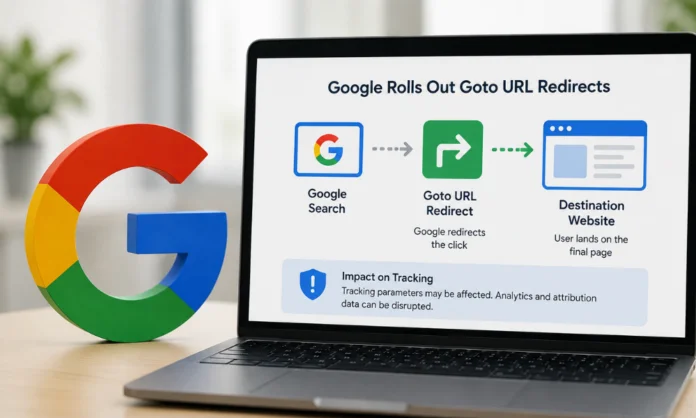
Google has officially confirmed the rollout of google.com/goto URL redirects across its Search results. The change replaces direct destination URLs with Google-controlled passthrough links. The company said the measure aims to protect Search and users from surging forms of abuse.
However, the change could create new challenges for rank trackers, scraping tools, and other services. The rollout was confirmed on August 26, 2026, following several weeks of testing. The testing began in July 2026 with the goal of preventing scraping of Google Search results by third-party tools and AI companies.
Google Adds a Redirect Layer to Search Results with Goto URLs
Previously, links in Google Search generally pointed directly to the destination webpage. Users and automated tools could therefore read the destination URL from the search result. The new system changes that behavior. Search result links can now point to a google.com/goto URL containing an encoded destination.
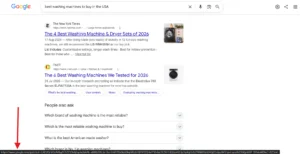
Google then redirects the user to the actual webpage. The destination remains visible below the result title; however, the underlying link is different. Google has not provided detailed technical documentation about the new system yet.
Nevertheless, a spokesperson from Google shared with Search Engine Roundtable, confirming the rollout of goto URL redirects: “We have a long history of deploying technical measures against evolving forms of abuse, and we regularly take steps to protect our services and users.”
The Rollout of Goto URL Redirects Could Disrupt Rank Tracking
The change is more significant for automated systems than ordinary Search users. Rank tracking platforms often collect Google results automatically. These systems can analyze destination URLs directly from search result pages. The new redirects make that process more complicated. The encoded goto links do not expose the destination in a readable form.
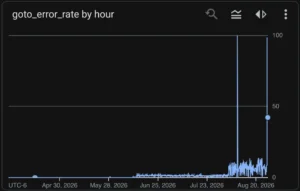
The change has caused chatter in the SEO world. Derek Perkins, Founder and CEO of Nozzle, posted on X, “Google has been testing anti-bot measures that eliminate all client side links in favor of google.com/goto… server side redirects. It was widely reported the first week of August from the first major test, and as of this morning, we’re seeing near 100% rollout across several residential ip providers. Here’s a chart showing the percentage of goto only SERPs we’ve fetched over the last ~4 months of the test.”
Epi Security’s Founder and CEO, Alex Greenland, stated on X, “Result link URLs are now being rewritten to google.com/goto?url=[custom base64-like encoding of URL or Google ID]. Upon click, they redirect to their proper destination.
I’m seeing this consistently this evening, affecting all searches and links. If it’s an experiment, I can’t get out of it right now. This looks to be Google’s latest response to AI and SERP scrapers, which pull the links from result pages en masse to build their own web indexes.
This has now become ever more challenging, because the scraper bot has to visit each result link to obtain its actual URL. It’s slower, and reveals patterns about your bot every time. The “url” parameter is a custom Google-specific encoding which is likely a reference to the webpage record in their index.”
More Requests Could Mean Higher Costs
The technical impact of Goto URL redirects could be substantial for companies tracking large numbers of keywords. Resolving the encoded links requires additional requests. Some tracking operations could require 500 to 1,000 requests for a single query. That creates a potential cost and infrastructure problem for rank tracking providers. It could also affect systems that collect Search data at scale.
Tools may need to follow redirects instead of simply reading destination addresses. Higher request volumes could then increase exposure to Google’s rate limits. Additionally, the change could impact scraping systems and AI companies that collect Search results automatically. However, Google has not explicitly identified those groups as the target.
Google Has Not Named a Specific Target Yet
Google’s statement deliberately remains broad, describing the rollout as protection against evolving forms of abuse. It did not specifically mention rank trackers, scrapers, AI companies, or any particular service.
Search industry observers have connected the move with Google’s broader efforts to limit automated access. The timing also comes amid Google’s legal dispute with SerpApi over Search scraping. The immediate impact should remain limited for everyday Search users. Clicking a result should still take users to the intended webpage. However, users may notice google.com/goto when hovering over Search links.
YourTechDiet assesses every tech update and insight so that you stay ahead. Read our news stories now and never miss any tech breakthroughs!
Also Read:
Setting Up Your Google Business Profile: Step-by-Step Guide
Google Search Ads 360 vs Google Ads: Which Should Enterprises Use