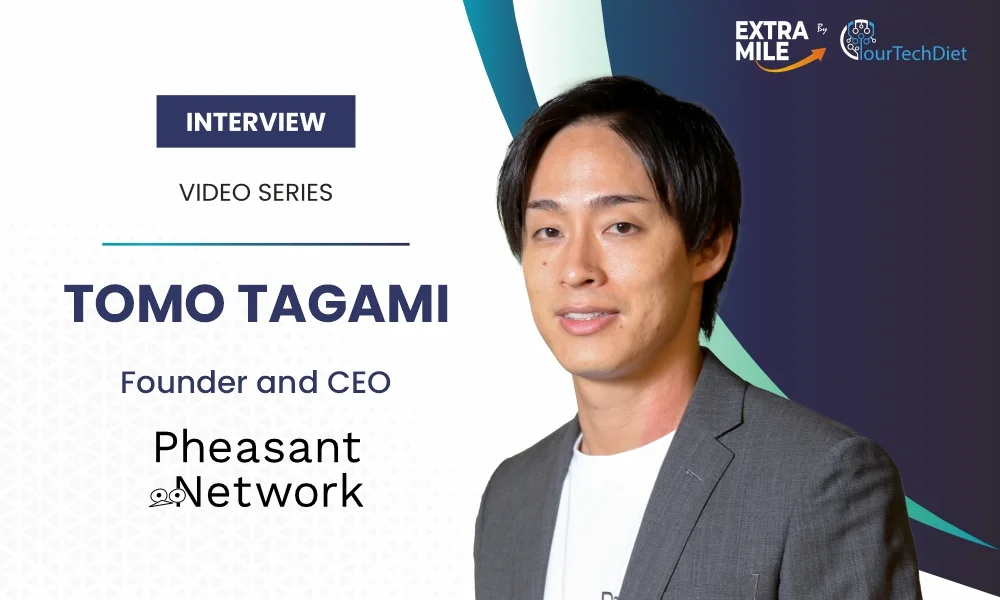
With over a decade of contribution in the crypto and blockchain space, our guest, Tomo, has been supporting Pheasant Network’s goal to provide a long-term impact to the crypto and blockchain ecosystem as a community driven project. So, let’s dive in and discuss how DeFAI is redefining the crypto space alongside understanding Pheasant Network’s role in it.
Hello, Tomo, we’re so super excited to host you today.
And the last one is trust, this means the team, users, and partners believe I will do what I say, especially in hard moments. Add resilient culture, solid cash discipline, and a clear narrative that stays true even as tactics change, and you have the foundation to compound for years.
Host: That’s truly amazing and impactful moving ahead. What does Bridge-as-a-Service mean? And how does Pheasant Network combine AI-powered intent-centric token transfer and swap mechanisms while offering BaaS services?
Yeah, BaaS stands for Bridge-as-a-Service. It’s an infrastructure that lets apps, wallets, and ecosystems offer cross-chain transfers and swaps without building or maintaining bridging complexity themselves. They integrate once and get a standardized, reliable cross-chain experience.
At Pheasant Network, we combine intent-centric routing with AI-driven optimization so a user can express a goal like “move funds to chain X and end up in token Y,” and the system finds an efficient path across bridges and swaps. This approach abstracts fragmentation away from end users and lets partners embed cross-chain functionality as a product feature, not as an engineering resources.
Host: Yeah, it’s fascinating to understand how Pheasant Networks is adopting AI to advance BaaS services.
So next up, how does decentralized finance AI or DeFAI work and how will it redefine the traditional finance system?
Tomo: Yeah. Yeah. DeFAI stands for decentralized finance AI. I do share interest in the convergence of DeFi primitives and AI that can reason about options, execute workflows, and adapt to changing conditions. Instead of users manually comparing routes, prices, risks, and fees, an agent can monitor markets and execute a user’s intent within constraints like slippage limits, time, security preferences, or compliance rules.
And over time, this shifts finance from interface-driven to outcome-driven. It lowers the expertise barrier, increasing automation, and makes financial coordination more programmable, which can pressure traditional systems to become more transparent, more efficient, and more user-aligned.
Host: Yeah indeed, DeFAI is surely going to bring some significant opportunities for financial transformation.
Going ahead, Pheasant recently raised $2 million in seed funding with support from the Ethereum Foundation, Polygon Labs, and Optimism. How do these partnerships influence your progress roadmap for 2026 and beyond?
Tomo: Yes, actually, we have collaborated with Ethereum Foundation, Optimism Foundation, and Polygon Labs. Yeah, so support from major ecosystem stakeholders does two important things. It validates the problem and the direction, which helps us move faster with confidence. It also expands our collaboration surface, letting us build with the people who set standards, ship core infrastructure, and grow developer communities.
For our 2026, this year and beyond roadmap, this translates into deeper integrations, broader network coverage, and a stronger focus on standards-based interoperability and security practices, so the protocol can scale responsibly while staying aligned with the long-term health of the ecosystem.
Host: Yeah. These partnerships are strongly contributing to your vision long term success.
So next up, Pheasant Network serves over 165 million community members. How do you ensure that your ‘optimistic’ bridging infrastructure remains both cost-efficient and secure in this process?
Tomo: Yeah, we approach this as an engineering and operations problem. Cost efficiency comes from smart routing, batching, and using the right settlement paths for the right transfers rather than forcing a single method everywhere.
Security comes from layered defenses, audits, careful contract design, monitoring, and conservative assumptions about adversarial behavior. We also prioritize clear failure modes, so the system degrades safely rather than unpredictably. At scale, the key is to treat security and cost as continuous optimization goals, not as one-time milestones.
Host: Cost effectiveness and security are surely unavoidable components while serving our huge community.
Tomo: Yeah, exactly.
Host: So, moving further, what are Pheasant Points? How do they help measure and recognize engagement?
Tomo: Yeah, actually we’re adding our reality program called Pheasant Points. Pheasant Points are an engagement layer designed to recognize meaningful participation across the Pheasant ecosystem. They help us measure contributions such as product usage, community activity, and participation in campaigns in a way that is transparent and easy to understand.
The goal is to reward consistent, constructive engagement and to create a feedback loop where users feel progress and ownership as the ecosystem grows.
Host: Yeah, that’s amazing.
Moving forward, how does Pheasant Network’s interoperability protocol seamlessly connect fragmented blockchain ecosystems? And how does such an approach streamline cross-chain interactions?
Tomo: Yeah, we are focusing on abstraction. Understand, right? This journey uses and different paths should not need to care about underlying fragmentation across blockchains by offering a unified interface for cross-chain transfers and SOX and the routing intent to the best a better way to get you US assets.
So we really just an idea about this agents juncture you them must make they represent mass bus best end for bridge and this means they can integrate loss and offer cross-chain functionality across many networks.
We focusing on abstraction and standardization. Users and developers should not need to care about the underlying fragmentation across cross chains. By offering a unified interface for cross-chain transfers and swaps and routing intents to the best available execution paths, we reduce the number of decisions a user must make.
For developers and partners, BaaS, Bridge-as-a-Service means they can integrate once and offer cross-chain functionality across many networks, which simplifies product design and improves user experience.
Host: Yeah, Pheasant Network’s interoperability protocol is surely setting new benchmarks for cross-chain interactions.
Lastly, but most importantly, what does the future of decentralized tech and blockchain hold? And which practices will dominate the industry in the upcoming decade?
Tomo: Yeah, that’s a good question. So, in the next decade, I expect three themes to dominate decentralized tech, with AI acting as the accelerator across all of them. And the first one, intent-based UX will become the default, where users express outcomes and AI agents translate those intents into safe, efficient execution across chains and protocols.
And the next one, interoperability standards will mature so agents and apps can coordinate predictably across ecosystems, reducing fragmentation and enabling truly composable cross-chain workflows.
And the last one, security will become more automated and continuous, with AI-assisted auditing, monitoring, and anomaly detection running alongside stronger formal methods and safer contract patterns. Beyond that, we’ll see AI agents evolve into always-on financial copilots that manage portfolios, rebalance risk, and execute multi-step strategies under user-defined constraints, and making decentralized finance feel effortless rather than complex. Yeah.
Host: Yeah. Indeed. The future of decentralized tech and blockchain is set to reach new heights with advancements in AI agents, security practices, and interoperability.
Host: That’s a wrap, Tomo. Thank you for joining us and sharing your insights on Decentralized Finance AI, interoperability, and the future of decentralization. Thank you so much.
Tomo: Yeah. Yeah. Thank you for giving us that great opportunity here and share my opinion.
Host: And a big thank you to our audience as well for tuning in to this episode of ExtraMile by YourTechDiet. Stay tuned with us for more insightful conversations with industry leaders and experts.