
After a long day of learning, manually creating flashcards to study feels tedious and time-consuming. Especially when that time could be better spent studying. Therefore, advancements in technology have transformed the educational sector and made studying easier with AI flashcards.
In 2024, the value of the AI-generated Personalized Flashcard Market was $1.98 billion. It is estimated to reach $8.62 billion by 2032 with a CAGR of 20.25%.
Let us read about how smart flashcards are reshaping the way students study in the current age of AI.
Understanding AI Flashcards
In simple terms, AI flashcards utilize artificial intelligence to automatically turn study materials such as class notes, lecture PDFs, etc., into flashcards. These flashcards can be personalized according to the students’ study requirements and used to track their progress; all while being engaging and effective at the same time.
How AI Converts Content into Flashcards
AI uses Machine Learning (ML), Natural Language Processing (NLP), and Deep Learning to generate flashcards from uploaded documents. AI first understands the uploaded content. Then generates questions, dividing them into recall, concept, and application questions and answers that are concise, easy to understand, and formatted for quick review.
Steps for Creating Smart Flashcards
You don’t need technical expertise to create AI flashcards. Follow these five steps:
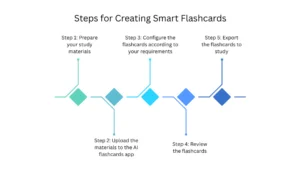
Step 1: Prepare your study materials
Assemble all your study materials, whether they are textbook PDFs, lecture notes, or even the link to a YouTube video. Ensure the materials are organized and complete for the best outputs.
Step 2: Upload the materials to the AI flashcards app
Navigate to the AI app or website’s platform and upload the materials. Copy and paste the YouTube video’s URL. The app or website will automatically process all the documents and links.
Step 3: Configure the flashcards according to your requirements
When you click “Generate Flashcards” you can select preferences like the number of flashcards, level of difficulty, and if you want the questions to be based on basic or complex concepts.
Step 4: Review the flashcards
The AI will create your flashcards immediately. Review each card to modify wording, check accuracy, and add additional context or examples if required. This ensures the flashcards align with your course modules.
Step 5: Export the flashcards to study
Different apps and websites provide various methods to export flashcards. You may print them as PDFs or study directly within the app or website. You can also access these flashcards on multiple devices.
Benefits and Challenges of Smart Flashcards
In the modern era, almost everything is becoming digital, including study methods like flashcards. Here are a few benefits and challenges to automating flashcards.
Benefits
Efficient Learning
- These flashcards can analyze your learning techniques and adapt the flashcards to suit your learning needs.
- Manually creating flashcards is time-consuming. AI creates flashcards instantly, helping you save time and effort.
- Smart flashcards can produce real-time explanations and feedback, making the learning process easier.
Smart Data Analytics
- These flashcards track your study performance and growth, which helps you gain insight into your learning patterns and mistakes to work on.
- AI can assess data from multiple sources to identify recurring difficulties and address them in flashcards.
Interactive Learning
- Smart flashcards incorporating interactive methods like games, quizzes, and simulations make learning fun and engaging.
More Accessible and Portable
- You can access smart flashcards at any time through your computer, tablet, or smartphone.
- These flashcards can be synced across devices and, hence, allow you to continue learning from anywhere.
Better Memory Retention
- AI flashcards use spaced repetition algorithms. This helps schedule review sessions at regular intervals to increase long-term memory retention.
- Using multimedia features such as images, videos, and audio, smart flashcards improve memory recall by engaging multiple senses.
Challenges
- Reliance on internet connection: Smart flashcards can only be created using the internet. Areas with poor or no connectivity may not be able to access these flashcards.
- Technical concerns: In case of technical issues, all generated flashcards, saved progress, and performances may be damaged or erased.
- Reduced human interaction: The role of teachers and peers is reduced with the integration of AI into making flashcards.
AI Flashcards as a Modern Learning Method
AI flashcards have transformed the way we study. These are powerful learning tools with their tailored approach, interactive methods, and improved efficiency. Not only are they built to boost academic performance, but they also make learning fun.
Click here to check out more blogs on the integration of AI in other industries.
FAQs
Q1. What are smart flashcards?
Answer: Smart or AI flashcards use artificial intelligence to create, personalize, and optimize flashcards with the help of uploaded study materials.
Q2. How do smart flashcards compare to manual flashcards?
Answer: Creating manual flashcards is time-consuming. Smart flashcards automate creating the content on the flashcards, personalize it, provide interactive learning sessions, and deliver results instantly.
Q3. Can AI flashcards help me prepare for my exams?
Answer: Yes, smart flashcards are a highly productive tool for exam preparation. They can help you identify gaps in your knowledge and create study plans according to your performance. AI-driven quizzes, and feedback can boost your exam prep.
Recommended For You:
Exploring the Implications of Generative AI natural language processing for Marketers
What is Large Language Model? – An In-Depth Exploration of LLMs